66win login Probability in Casino Games
Mastering 66win login: Understanding Probability in Casino Games
Welcome to the exciting world of online casinos! If you're new to gaming, understanding the basics of probability is key to enhancing your experience and making informed decisions. This guide will walk you through the fundamental concepts of probability as they apply to various casino games, helping you play smarter and enjoy more. When you first make your 66win login, you'll find a vast array of games, each with its own unique set of odds and potential payouts. While luck always plays a role, a solid grasp of probability can significantly improve your understanding of how games work and what to expect. We'll cover everything from simple coin flips to the more complex probabilities in card games and slots, providing you with the essential knowledge to navigate the vibrant online casino landscape in the Philippines market.
Whether you're spinning the reels of a slot machine or placing bets at a virtual table, knowing the underlying probabilities can transform your approach. This beginner-friendly guide is designed to demystify these concepts, offering practical insights and tips to help you get started. So, let's dive in and uncover the secrets behind the odds, making your gaming journey with 66win login not just fun, but also strategically sound.
Table of Contents
What is Probability in Casino Games?
Probability is the mathematical measure of the likelihood that an event will occur. In the context of casino games, it tells you the chances of winning or losing a particular bet. It's usually expressed as a number between 0 and 1, where 0 means the event is impossible and 1 means it's certain. Sometimes, it's also shown as a percentage or odds (e.g., 1 in 3, or 2 to 1).
For example, if you flip a fair coin, the probability of it landing on heads is 0.5 (or 50%), because there are two equally likely outcomes (heads or tails), and one of them is heads. Casino games, while more complex, operate on the same fundamental principles. Every spin of a slot machine, every card dealt in blackjack, and every roll of the dice in craps has a predetermined set of probabilities governing its outcome.
Understanding probability doesn't mean you can predict the future, but it does help you grasp the long-term expectations of a game. It allows you to understand why some bets are riskier than others and why the casino always has a slight edge over time. This foundational knowledge is crucial for any player looking to approach online casino gaming, especially when exploring the diverse offerings after a successful 66win login.
Understanding House Edge and RTP (Return to Player)
Two critical concepts related to probability in casino games are House Edge and Return to Player (RTP). These figures are essential for understanding your long-term prospects in any game.
House Edge
The house edge is the built-in advantage that the casino has over the player in any given game. It's expressed as a percentage of the player's initial bet and represents the average profit the casino expects to make from each wager over the long run. For instance, if a game has a 2% house edge, it means that for every $100 wagered, the casino expects to keep $2 as profit, while the remaining $98 is returned to players in the form of winnings.
The house edge varies significantly between different games and even between different bets within the same game. Games like blackjack, when played with optimal strategy, can have a very low house edge (under 1%), while others like keno or some slot machines might have a house edge of 5% or even higher. This edge is what ensures the casino's profitability and sustainability.
Return to Player (RTP)
RTP is the inverse of the house edge, typically used for slot machines and some other electronic games. It's the theoretical percentage of all wagered money that a slot machine or casino game will pay back to players over time. If a slot machine has an RTP of 96%, it means that for every $100 wagered, the machine is expected to pay back $96 to players over millions of spins, keeping $4 as the house's profit (which corresponds to a 4% house edge).
Higher RTP percentages are generally better for players, as they indicate a smaller house edge and thus a greater theoretical return on investment. When choosing games from providers like JDB Gaming, JILI Games, or Play'n GO on 66win login, looking at the RTP can be a smart strategy, especially for new players. Remember, RTP is a long-term average; in the short term, anything can happen due to the random nature of outcomes.
Probability in Popular Casino Games
Let's explore how probability applies to some of the most popular casino games you'll find after your 66win login, focusing on games popular in the Philippines market.
Slot Machines (JILI Games, Play'n GO, PS Gaming)
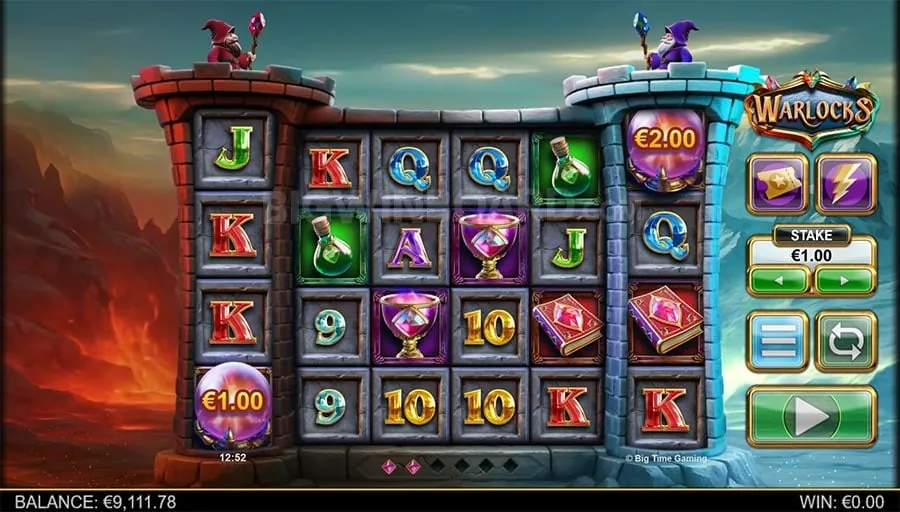
Slot machines are perhaps the most straightforward in terms of probability for the player, though the underlying mechanics are complex. Each spin is an independent event, meaning the outcome of previous spins has no bearing on the next. The probability of hitting a winning combination or a jackpot is determined by the game's Random Number Generator (RNG) and the programmed RTP. While you can't influence the outcome, understanding the RTP gives you an idea of the game's generosity over time. Games from providers like JILI Games and Play'n GO often publish their RTPs, which can range from 92% to 98%.
Blackjack (Live Casino, Card Games)
Blackjack is unique because player decisions can significantly alter the probabilities. With a basic strategy, players can reduce the house edge to less than 1%. The probability of getting a blackjack (an Ace and a 10-value card) from the first two cards is approximately 4.83%. Knowing when to hit, stand, double down, or split is based on mathematical probabilities derived from the cards remaining in the shoe. This makes blackjack one of the few casino games where skill genuinely influences the outcome.
Roulette (Live Casino)
In European Roulette, there are 37 pockets (numbers 1-36 plus a single zero). The probability of hitting any single number is 1/37, or approximately 2.7%. For a simple red/black bet, there are 18 red and 18 black pockets, plus the green zero. So, the probability of hitting red is 18/37 (approx. 48.6%), not 50% due to the zero. This small difference is where the house edge comes from. American Roulette has two zeros (0 and 00), increasing the house edge further.
Baccarat (Live Casino)
Baccarat is a game of chance with three main betting options: Player, Banker, or Tie. The Banker bet has a slightly higher probability of winning (around 45.85%) compared to the Player bet (around 44.62%), even with a commission taken on Banker wins. The Tie bet, while offering a much higher payout, has a very low probability of occurring (around 9.53%), making it a high-risk, high-reward option. This game is popular among players who prefer simplicity and a low house edge.
Practical Tips for Using Probability to Your Advantage
While you can't eliminate the house edge, understanding probability can help you make more informed decisions and manage your bankroll effectively after your 66win login.
- Choose Games with Lower House Edge/Higher RTP: For a better long-term chance of winning, opt for games known for their favorable odds. Blackjack with basic strategy, certain video poker variations, and European Roulette typically offer better odds than Keno or some progressive slots. Always check the RTP for slot games from providers like JDB Gaming or AP Gaming.
- Learn Basic Strategy for Skill Games: For games like blackjack, mastering basic strategy is crucial. This strategy is mathematically derived to give you the best possible move for every hand, minimizing the house edge.
- Understand Bet Probabilities: In games like craps or roulette, different bets have different probabilities and house edges. Some bets might offer high payouts but have extremely low chances of winning, while others offer smaller payouts but occur more frequently. Stick to bets with better odds, especially when starting.
- Manage Your Bankroll: Probability tells us that in the short term, anything can happen. You can have winning streaks or losing streaks. Set a budget for your gaming sessions and stick to it. Never chase losses, as this often leads to further financial strain.
- Don't Fall for "Gambler's Fallacy": This common misconception is the belief that past outcomes influence future independent events (e.g., if a coin has landed on heads five times in a row, it's more likely to land on tails next). Each spin of a slot or roll of dice is independent.
- Utilize Promotions and Bonuses: Keep an eye out for promotions and bonuses offered by 66win login. These can provide extra funds or free spins, effectively increasing your playtime and chances without additional personal investment.
Common Misconceptions About Casino Probability
New players often fall prey to several common misunderstandings about probability in casino games. Dispelling these myths is crucial for a realistic and enjoyable gaming experience.
The Gambler's Fallacy
As mentioned earlier, this is the belief that if an event has happened more frequently than normal in the past, it is less likely to happen in the future, or vice-versa. For example, if a roulette wheel has landed on black five times in a row, some might believe red is